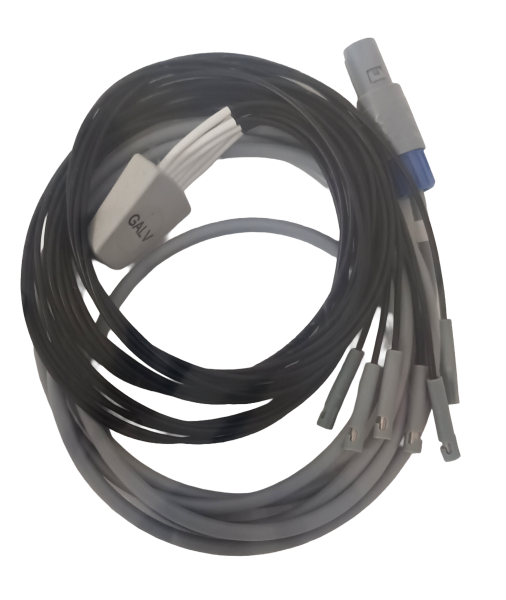
As a neutral reference during surgical procedures.
What is the procedure for carrying out the diathermy technique?
To perform diathermy treatments, it is necessary to have a diathermy device and adhesive electrodes containing an adhesive and conductive gel. These electrodes are placed in concave areas, such as muscles near the treatment area, ensuring they are in proper contact with the patient's skin, and are connected to the diathermy device at the opposite end.
Among the types of electrodes, in the case of resistive electrodes, The reaction occurs between the resistive electrode and the return plate (which is placed in contact with the skin). This type of diathermy affects tissues with greater resistance, such as bones or tendons, more.
Diathermy offers a wide range of benefits: Tissue regeneration: Improves healing and promotes regeneration of damaged tissues. Effective for musculoskeletal and vascular pathologies, it relieves pain and reduces inflammation. Tissue regeneration in:
Cartilages: Stimulates the activation of stem cells for the formation of cartilaginous tissue.
Bones: Accelerates the repair of bone damage, including fractures and degeneration, by promoting mineralization.
Anti-cellulite and anti-adipogenic treatments: Can be used in aesthetic medicine to reduce adiposity and cellulite by decreasing the synthesis and accumulation of fatty acids in cells.
Indiba results according to studies: Effectiveness and safety in musculoskeletal injuries, reducing pain and accelerating functional recovery. High rate of total recovery, especially in cases of acute injuries. Faster recovery with diathermy compared to other treatments. Variable effectiveness depending on the pathology, being more effective in muscle injuries followed by bone and joint injuries, and less so in ligamentous injuries.
https://herbitas.com/en/adhesive-electrode-resistive-diathermy.html7157Adhesive Electrode Resistive Diathermy<h2>As a neutral reference during surgical procedures.</h2>
<h2>What is the procedure for carrying out the diathermy technique?</h2>
<p>To perform diathermy treatments, it is necessary to have a diathermy device and adhesive electrodes containing an adhesive and conductive gel. These electrodes are placed in concave areas, such as muscles near the treatment area, ensuring they are in proper contact with the patient's skin, and are connected to the diathermy device at the opposite end.</p>
<p>Among the types of electrodes, in the case of resistive electrodes, The reaction occurs between the resistive electrode and the return plate (which is placed in contact with the skin). This type of diathermy affects tissues with greater resistance, such as bones or tendons, more.</p>
<p>Diathermy offers a wide range of benefits: Tissue regeneration: Improves healing and promotes regeneration of damaged tissues. Effective for musculoskeletal and vascular pathologies, it relieves pain and reduces inflammation. Tissue regeneration in:</p>
<ul>
<li>Cartilages: Stimulates the activation of stem cells for the formation of cartilaginous tissue.</li>
<li>Bones: Accelerates the repair of bone damage, including fractures and degeneration, by promoting mineralization.</li>
<li>Anti-cellulite and anti-adipogenic treatments: Can be used in aesthetic medicine to reduce adiposity and cellulite by decreasing the synthesis and accumulation of fatty acids in cells.</li>
<li>Indiba results according to studies: Effectiveness and safety in musculoskeletal injuries, reducing pain and accelerating functional recovery. High rate of total recovery, especially in cases of acute injuries. Faster recovery with diathermy compared to other treatments. Variable effectiveness depending on the pathology, being more effective in muscle injuries followed by bone and joint injuries, and less so in ligamentous injuries.</li>
</ul>
<p> </p>https://herbitas.com/media/catalog/product/2/1/21.226.49.png3.6instock3.63.600000https://herbitas.com/media/catalog/product/2/1/21.226.49.png/Clinical Treatment/Clinical Treatment/Diathermy podiatry2023-11-03T09:29:11+0000shop1
 en
en  Español
 Français
 Português
 Italiano